
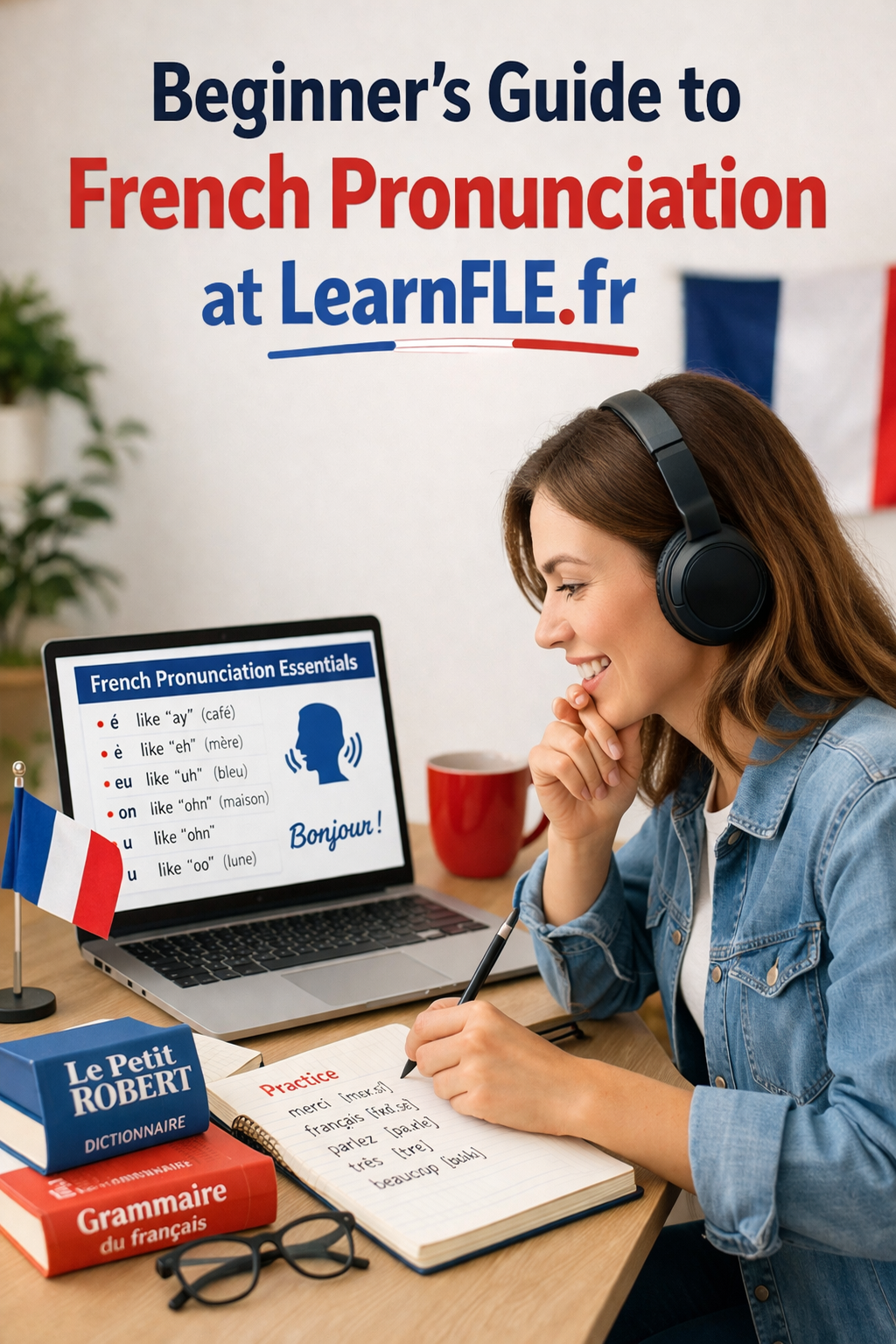
Learning French is an exciting journey, but for beginners, pronunciation can feel like one of the biggest challenges. Unlike English, French pronunciation involves nasal sounds, silent letters, and unique rhythms that may seem unfamiliar at first. However, with the right guidance and consistent practice, mastering French pronunciation becomes not only achievable but enjoyable.
At LearnFLE.fr, beginners are guided step-by-step to develop clear, confident pronunciation through personalized attention and practical techniques. This beginner’s guide will help you understand the fundamentals and build a strong foundation in French pronunciation.
Why French Pronunciation Matters
Pronunciation is the key to effective communication. Even if you know grammar and vocabulary, incorrect pronunciation can lead to misunderstandings.
Good pronunciation helps you:
- Speak clearly and confidently
- Improve listening comprehension
- Sound more natural and fluent
- Build confidence in conversations
At LearnFLE.fr, pronunciation is treated as a core skill from day one, ensuring students don’t develop bad habits early.
Understanding the French Alphabet and Sounds
French uses the same alphabet as English, but the pronunciation of letters often differs.
Vowels in French
French vowels are more consistent than English but require precise articulation. The main vowels include:
- A – pronounced like “ah”
- E – can vary (uh, eh, or silent)
- I – pronounced like “ee”
- O – pronounced like “oh”
- U – a unique sound (formed by rounding lips while saying “ee”)
Mastering vowels is essential because they form the base of most words.
Nasal Sounds – A Unique Feature
One of the most distinctive aspects of French pronunciation is nasal sounds. These occur when air passes through the nose and mouth simultaneously.
Common nasal combinations:
- an / en – like “ahn”
- on – like “ohn”
- in / ain / ein – like “an” (nasalized)
For beginners, nasal sounds may feel unusual, but with guided practice at LearnFLE.fr, students quickly become comfortable using them naturally.
Silent Letters in French
French words often contain letters that are not pronounced, especially at the end of words.
Examples:
- Parler → “par-lay” (the “r” is silent)
- Petit → “puh-tee” (the “t” is silent)
Understanding silent letters helps avoid overpronunciation, a common mistake among beginners.
The Importance of Liaison
Liaison is the linking of sounds between words, making French speech smooth and musical.
Example:
- Les amis → pronounced “lay za-mee”
Here, the “s” in les connects to the vowel in amis.
At LearnFLE.fr, students practice liaison through real-life speaking exercises to sound more natural.
French Rhythm and Intonation
French has a distinct rhythm compared to English. It is often described as more fluid and evenly paced.
Key features:
- Stress is usually on the last syllable
- Sentences flow smoothly without strong breaks
- Intonation rises and falls gently
Listening and repeating native speech helps learners develop this natural rhythm over time.
Common Pronunciation Challenges for Beginners
Many beginners face similar difficulties when learning French pronunciation:
1. The “R” Sound
The French “R” is pronounced from the back of the throat, unlike the English “R.” It may feel difficult initially, but consistent practice helps.
2. The “U” Sound
This sound does not exist in English. It requires rounding your lips while keeping the tongue forward.
3. Distinguishing Similar Sounds
Words like beau and bon may sound similar to beginners but have different meanings and pronunciations.
At LearnFLE.fr, teachers provide targeted exercises to overcome these challenges effectively.
Practical Tips to Improve French Pronunciation
1. Listen Actively
Regularly listen to French audio, such as conversations, songs, or podcasts. This helps train your ear.
2. Repeat and Mimic
Imitate native speakers as closely as possible. Focus on tone, rhythm, and mouth movement.
3. Practice Speaking Daily
Consistency is key. Even a few minutes of daily practice can lead to noticeable improvement.
4. Record Yourself
Listening to your own pronunciation helps identify mistakes and track progress.
5. Learn with Expert Guidance
Personalized coaching ensures you correct errors early and develop proper pronunciation habits.
How LearnFLE.fr Helps Beginners Master Pronunciation
LearnFLE.fr offers a structured and student-focused approach to pronunciation training:
Personalized Attention
Teachers focus on each student’s specific pronunciation challenges and provide customized exercises.
Small Batch or One-on-One Classes
This ensures more speaking time and immediate feedback.
Interactive Practice Sessions
Students engage in conversations, role-plays, and listening activities.
Real-Time Corrections
Mistakes are corrected instantly, helping students improve quickly.
Confidence Building
A supportive environment encourages students to speak without fear.
The Role of Practice and Patience
Pronunciation is not something you master overnight. It requires:
- Regular practice
- Active listening
- Willingness to make mistakes and learn
With the right guidance and consistent effort, improvement is inevitable.
Final Thoughts
French pronunciation may seem challenging at first, but it becomes easier with the right approach and support. By understanding basic sounds, practicing regularly, and focusing on listening and speaking, beginners can develop clear and confident pronunciation.
At LearnFLE.fr, students are guided every step of the way, ensuring they build a strong foundation from the beginning. With personalized attention, practical exercises, and expert coaching, learners not only improve their pronunciation but also gain the confidence to communicate effectively.
Starting your French journey with the right pronunciation skills sets the stage for long-term success. So take the first step, practice consistently, and enjoy the beauty of speaking French with clarity and confidence.