
French language proficiency has become one of the most valuable assets for individuals planning to study, work, or immigrate to Canada. The TCF Canada (Test de Connaissance du Français pour le Canada) is officially recognized by Immigration, Refugees and Citizenship Canada (IRCC) and is widely accepted for Canadian immigration programs. Achieving a high score in this exam can significantly improve your Comprehensive Ranking System (CRS) points for Express Entry and open doors to exciting career opportunities.
With the growing popularity of online learning, thousands of candidates are now preparing for the TCF Canada exam remotely. However, success requires more than simply attending online classes. You need a structured preparation strategy, consistent practice, and expert guidance.
At Learnfle.fr, students receive comprehensive online training designed to help them master every section of the TCF Canada exam. In this guide, we’ll explore the best online TCF Canada preparation strategies that can help you achieve high scores.
Understand the TCF Canada Exam Format
The first step toward scoring well is understanding the exam structure. Many students lose valuable marks because they begin studying without knowing how the test is organized.
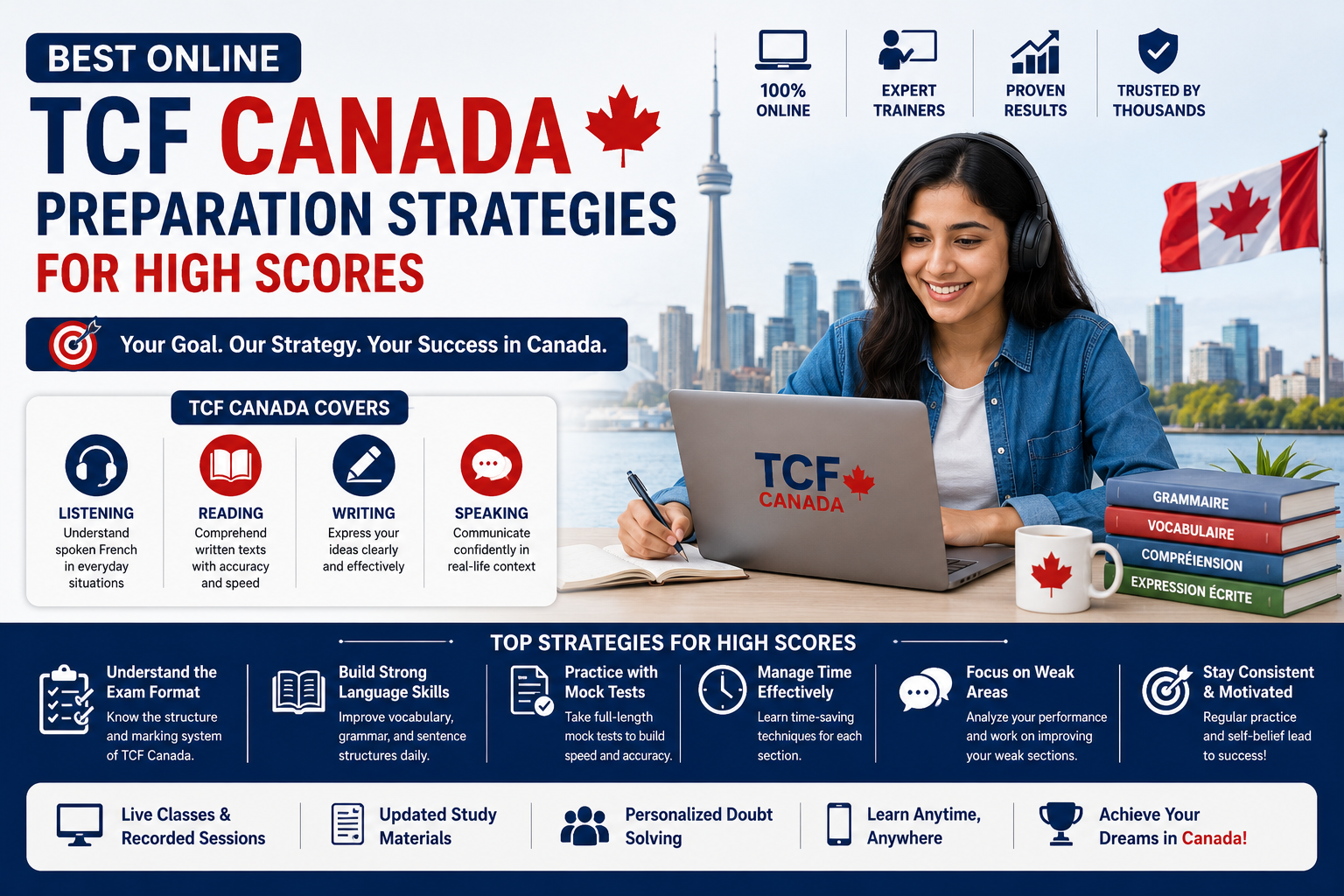
The TCF Canada consists of four mandatory sections:
- Listening Comprehension
- Reading Comprehension
- Writing Expression
- Speaking Expression
Each section evaluates practical French communication skills rather than memorized grammar rules. The exam is designed to assess your ability to use French in real-life situations, so becoming familiar with the format and timing is essential before you begin preparation.
Set a Clear Target Score
Before creating your study plan, determine your target score based on your immigration or academic goals.
Ask yourself:
- What CLB (Canadian Language Benchmark) score do I need?
- Which section requires the highest improvement?
- How much time can I study daily?
Having a clear goal keeps your preparation focused and allows you to monitor progress effectively.
Choose a Structured Online Course
One of the biggest advantages of online learning is flexibility, but not every online course provides systematic preparation.
A quality TCF Canada course should include:
- Live online classes
- Complete syllabus coverage
- Practice worksheets
- Speaking sessions
- Writing correction
- Mock examinations
- Individual performance analysis
At Learnfle.fr, experienced French trainers guide students through every stage of exam preparation using structured lessons and personalized feedback.
Create a Weekly Study Schedule
Consistency always produces better results than studying for long hours occasionally.
A balanced weekly schedule may look like this:
Monday
- Listening Practice
- Vocabulary Revision
Tuesday
- Grammar
- Reading Exercises
Wednesday
- Speaking Practice
Thursday
- Writing Tasks
Friday
- Listening Mock Test
Saturday
- Full-Length Practice Test
Sunday
- Error Analysis and Revision
Official preparation guidance emphasizes structured planning, identifying weak skills early, and progressing from foundational practice to timed exam simulations.
Build French Vocabulary Daily
Vocabulary plays a major role in all four exam sections.
Instead of memorizing random words, learn vocabulary by themes such as:
- Travel
- Employment
- Education
- Family
- Environment
- Healthcare
- Technology
- Banking
- Immigration
- Shopping
Create flashcards and review them every day.
Learning words in context helps you remember them much longer.
Practice Listening Every Day
Listening is often considered one of the most challenging sections because the audio is played only once during the exam.
Improve your listening skills by:
- Listening to French podcasts
- Watching French news
- Following French YouTube channels
- Watching French movies with subtitles
- Practicing official-style listening exercises
While listening:
- Focus on keywords
- Identify numbers and dates
- Understand the speaker’s intention
- Avoid translating every sentence
Experts recommend practicing under real exam conditions, using one-play audio, taking brief notes, and exposing yourself to different French accents.
Improve Reading Speed
The reading section contains multiple passages of varying difficulty.
Many candidates understand French but struggle because they run out of time.
Effective reading strategies include:
- Skimming before detailed reading
- Identifying keywords
- Ignoring unfamiliar words initially
- Reading questions first
- Managing time carefully
Daily reading materials include:
- French newspapers
- Blogs
- Advertisements
- Emails
- Public notices
- Short articles
Regular reading improves both vocabulary and comprehension.
Master French Grammar
Grammar forms the foundation of every language skill.
Important grammar topics include:
- Present tense
- Past tense
- Future tense
- Conditional
- Pronouns
- Prepositions
- Adjectives
- Connectors
- Sentence structure
Instead of memorizing rules, practice applying grammar in speaking and writing.
Practice Writing Every Week
The writing section evaluates your ability to communicate clearly and logically.
Practice writing:
- Emails
- Formal letters
- Opinion essays
- Short messages
- Invitations
- Complaint letters
After writing:
- Check grammar
- Correct spelling
- Improve sentence structure
- Replace repetitive vocabulary
Professional feedback helps identify mistakes you may overlook yourself.
Speak French Every Day
Speaking improves confidence faster than any other activity.
Daily speaking practice can include:
- Self-introduction
- Daily routine
- Describing pictures
- Giving opinions
- Role-play conversations
- Mock interviews
Record your voice regularly.
Compare your pronunciation with native speakers.
Speak naturally rather than trying to use unnecessarily difficult vocabulary.
Take Full-Length Mock Tests
Mock exams simulate the actual test experience.
Benefits include:
- Better time management
- Reduced exam anxiety
- Identification of weak areas
- Improved confidence
Many successful candidates take at least one full mock exam every week during the final stages of preparation.
Analyze Your Mistakes
Simply completing practice tests is not enough.
After every mock test:
- Review incorrect answers
- Understand why mistakes happened
- Revise weak grammar topics
- Reattempt difficult questions
Keeping an error notebook allows you to avoid repeating the same mistakes.
Learn Time Management
High scores depend not only on knowledge but also on completing every section within the allotted time.
Practice using official timings:
- Listening: 35 minutes
- Reading: 60 minutes
- Writing: 60 minutes
- Speaking: Approximately 12 minutes
The more familiar you become with these limits, the more confident you’ll feel on exam day.
Stay Consistent
Language learning is a gradual process.
Avoid studying only on weekends.
Instead:
- Study 60–90 minutes daily.
- Revise vocabulary regularly.
- Practice each skill every week.
- Track your progress.
- Celebrate small improvements.
Consistency delivers better long-term results than occasional intensive study.
Why Choose Learnfle.fr for TCF Canada Preparation?
Selecting the right coaching institute can make a significant difference in your performance.
At Learnfle.fr, students benefit from:
- Experienced French language trainers
- Live interactive online classes
- Complete TCF Canada syllabus coverage
- Personalized study plans
- Speaking and pronunciation sessions
- Writing correction with expert feedback
- Regular mock tests
- Flexible class schedules
- One-on-one doubt-solving sessions
- Continuous performance tracking
Whether you’re a beginner or already have a foundation in French, Learnfle.fr provides a structured learning path to help you achieve your target score with confidence.
Final Thoughts
Scoring high in the TCF Canada exam is not about studying harder—it is about studying smarter. A well-planned online preparation strategy, daily language practice, regular mock tests, and expert guidance can significantly improve your performance across all four sections.
By understanding the exam format, strengthening vocabulary and grammar, practicing listening, reading, writing, and speaking consistently, and reviewing your mistakes, you can steadily build the skills needed to achieve your desired CLB level.
If you’re aiming for Canadian immigration, higher education, or career advancement, enrolling in a professional online preparation program at Learnfle.fr can provide the structure, support, and expert coaching needed to maximize your TCF Canada score and reach your goals.