
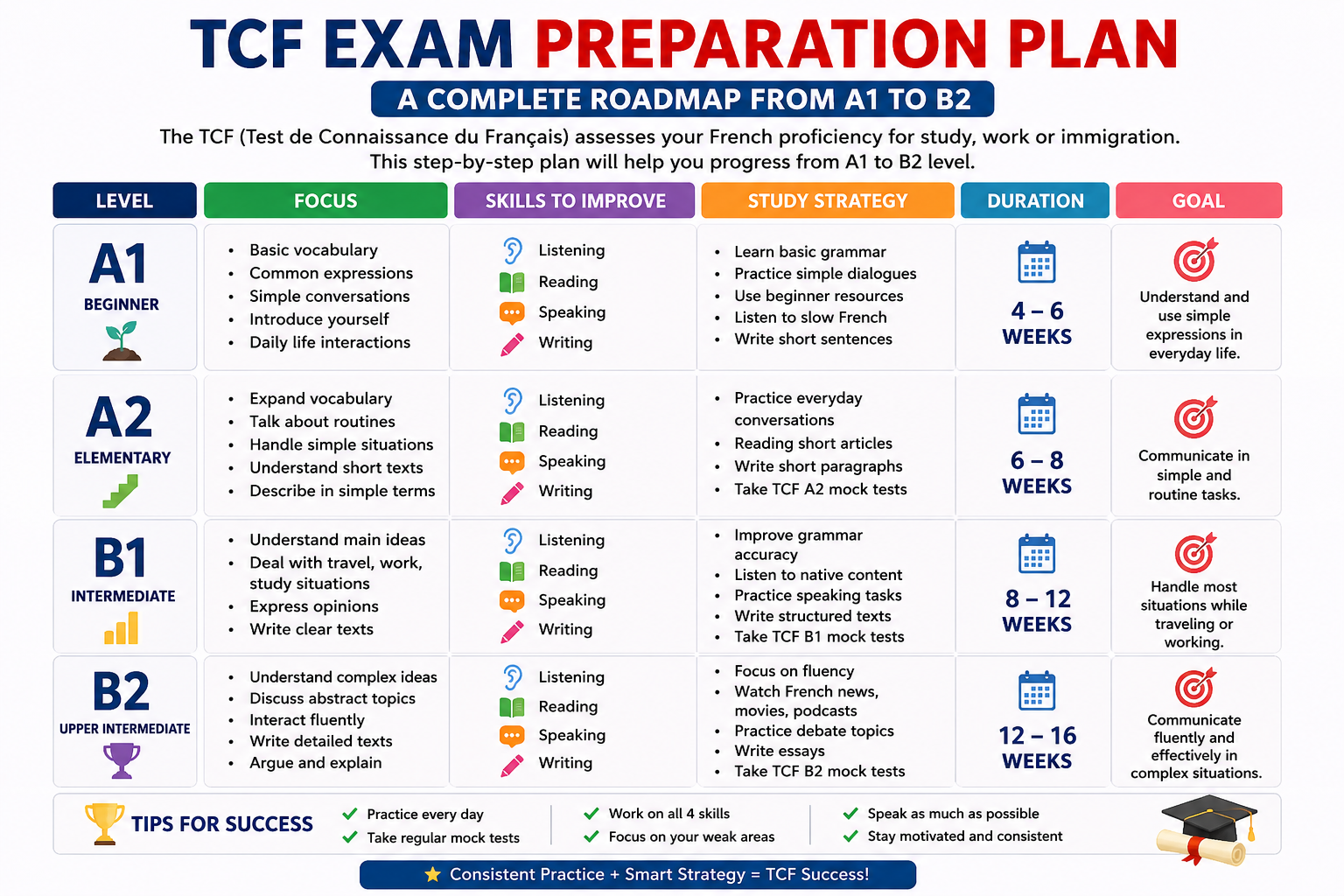
Preparing for the Test de Connaissance du Français (TCF) can seem challenging when you’re starting your French language journey. Whether your goal is Canadian immigration, higher education, employment in a French-speaking environment, or simply earning an internationally recognized French proficiency certificate, a structured preparation plan can help you progress confidently from A1 (Beginner) to B2 (Upper Intermediate).
At LearnFLE.fr, students receive comprehensive TCF preparation through structured lessons aligned with the Common European Framework of Reference for Languages (CEFR). The institute offers live online and offline classes, experienced French trainers, personalized mentoring, speaking practice, mock tests, and exam-focused strategies designed to help learners steadily improve their French language skills.
Understanding the TCF Exam
The TCF (Test de Connaissance du Français) is an official French language proficiency test administered by France Éducation International. It evaluates a candidate’s overall ability in French and is accepted by universities, employers, and immigration authorities in various countries.
The exam assesses multiple language skills, including:
- Listening Comprehension
- Reading Comprehension
- Speaking
- Writing
- Grammar and Vocabulary (depending on the exam version)
Unlike some certification exams, the TCF measures your current level of French rather than requiring you to “pass” or “fail.”
Why Follow a Structured Preparation Plan?
Many students attempt to prepare without a roadmap and often struggle with grammar, vocabulary, or speaking confidence. A step-by-step learning plan helps you:
- Build a strong language foundation
- Improve one level at a time
- Develop all four language skills equally
- Avoid common learning mistakes
- Gain confidence before attempting mock tests
- Become familiar with the TCF exam format
LearnFLE.fr follows the internationally recognized CEFR progression, helping learners advance systematically from beginner to advanced proficiency.
Stage 1: A1 – Build Your French Foundation
The A1 level is designed for complete beginners.
Learning Objectives
During this stage, students focus on:
- French alphabet and pronunciation
- Greetings and introductions
- Numbers, dates, and time
- Daily vocabulary
- Basic sentence formation
- Present tense verbs
- Articles and gender
- Everyday conversations
Skills to Practice
Listening:
- Simple conversations
- Basic announcements
- Everyday dialogues
Speaking:
- Introducing yourself
- Talking about family
- Describing daily routines
Reading:
- Short notices
- Menus
- Simple emails
Writing:
- Basic sentences
- Personal information
- Short messages
Study Tips
- Learn 15–20 new words daily.
- Practice pronunciation regularly.
- Watch beginner French videos.
- Complete short grammar exercises every day.
A strong A1 foundation makes the transition to higher levels much easier.
Stage 2: A2 – Strengthen Everyday Communication
Once you master A1 concepts, the next goal is A2.
At this level, students begin communicating more confidently in everyday situations.
Focus Areas
- Past tense (Passé Composé)
- Future tense
- Reflexive verbs
- Expanded vocabulary
- Asking and answering questions
- Daily conversations
Listening Practice
Practice understanding:
- Travel announcements
- Telephone conversations
- Restaurant discussions
- Shopping dialogues
Speaking Practice
Discuss topics like:
- Your hobbies
- Your work
- Your studies
- Weekend activities
- Travel experiences
Reading Practice
Read:
- Advertisements
- News headlines
- Short articles
- Personal letters
Writing Practice
Write:
- Emails
- Invitations
- Daily journal entries
- Simple descriptions
At LearnFLE.fr, students participate in interactive classroom activities that build confidence through regular speaking practice and personalized feedback.
Stage 3: B1 – Develop Independent Communication
The B1 level marks an important milestone.
Students can now understand longer conversations and express opinions more naturally.
Grammar Topics
- Conditional tense
- Imperfect tense
- Relative pronouns
- Complex sentence structures
- Connectors
- Reported speech
Vocabulary Expansion
Focus on:
- Education
- Employment
- Technology
- Health
- Travel
- Environment
- Current affairs
Listening
Listen to:
- Podcasts
- News reports
- Interviews
- Radio discussions
Speaking
Practice:
- Giving opinions
- Storytelling
- Presentations
- Debates
- Role plays
Reading
Read:
- Newspaper articles
- Blogs
- Opinion pieces
- Travel guides
Writing
Learn to write:
- Essays
- Formal emails
- Complaint letters
- Opinion paragraphs
B1 students should also begin solving timed TCF practice exercises to become familiar with the exam format. Consistent practice under time limits is widely recommended by successful candidates.
Stage 4: B2 – Achieve TCF Success
Most students preparing for Canadian immigration or university admission aim for B2.
At this stage, fluency, accuracy, and confidence become equally important.
Advanced Grammar
Study:
- Subjunctive mood
- Advanced connectors
- Passive voice
- Complex sentence construction
- Formal writing
Speaking
Students learn to:
- Defend opinions
- Participate in discussions
- Present arguments
- Speak spontaneously
Listening
Practice understanding:
- Fast conversations
- Television interviews
- Academic lectures
- Radio programs
Reading
Read:
- Editorials
- Reports
- Professional documents
- Academic articles
Writing
Focus on:
- Structured essays
- Reports
- Argumentative writing
- Formal correspondence
At LearnFLE.fr, B2 preparation includes mock exams, speaking simulations, writing correction, and exam-oriented guidance to help students perform confidently.
Master the Four Core Skills
A successful TCF preparation strategy balances all four language skills.
Listening
- Listen to French daily.
- Focus on pronunciation.
- Practice identifying key information quickly.
Reading
- Read newspapers and short articles.
- Learn unfamiliar vocabulary in context.
- Practice answering questions within time limits.
Speaking
- Speak French every day.
- Record your answers.
- Practice describing pictures and expressing opinions.
Writing
- Write regularly.
- Get feedback from experienced trainers.
- Learn common sentence structures for formal and informal writing.
Take Regular Mock Tests
Mock tests are one of the most effective ways to prepare for the TCF exam.
Benefits include:
- Understanding the exam format
- Improving time management
- Identifying weak areas
- Reducing exam anxiety
- Tracking progress
LearnFLE.fr integrates regular mock tests and practice sessions into its preparation programs so students become familiar with real exam conditions.
Build a Daily Study Routine
Consistency is more important than occasional long study sessions.
A balanced daily schedule could include:
- 30 minutes of grammar
- 30 minutes of vocabulary
- 30 minutes of listening
- 30 minutes of reading
- 20 minutes of speaking
- 20 minutes of writing
Studying a little every day helps reinforce learning and improves long-term retention.
Common Mistakes to Avoid
Many TCF candidates struggle because they:
- Ignore listening practice
- Memorize vocabulary without context
- Avoid speaking French
- Skip writing exercises
- Wait until the last minute to practice exam-style questions
- Focus only on grammar
A balanced approach that combines language development with exam-specific practice generally produces better results.
Why Choose LearnFLE.fr for TCF Preparation?
LearnFLE.fr provides a structured learning environment designed for students progressing from A1 to B2.
Key advantages include:
- CEFR-based curriculum
- Experienced French trainers
- Live online and offline classes
- Small batch sizes
- Individual attention
- Regular speaking practice
- Mock examinations
- Writing evaluation
- Flexible class schedules
- Personalized study plans
These features help students develop practical language skills while becoming familiar with the TCF examination format.
Conclusion
Achieving a strong TCF score requires more than memorizing grammar rules—it requires consistent practice, structured learning, and regular assessment across listening, reading, writing, and speaking. By progressing step by step from A1 to B2, learners can build the confidence and language proficiency needed for academic, professional, or immigration goals.
With its CEFR-aligned curriculum, expert trainers, interactive classes, personalized mentoring, and exam-focused preparation, LearnFLE.fr provides a comprehensive pathway for students preparing for the TCF exam. Whether you are starting with no prior knowledge of French or aiming to reach a competitive B2 level, a structured preparation plan can help you achieve your goals more efficiently and confidently.
Best Delf A2 Junior classes for kids
Best DELF Coaching South Delhi
Best IB French Coaching in Delhi NCR
Best Institute For French Language Course In Delhi
Best Offline french coaching institute in Delhi
DELF A1 EXAM PREPARAION near me
DELF B1 exam preparation course
DELF B2 Exam preparation course
French classes for school students in Delhi
French language classes near me
Advanced French classes in South Delhi
IB French classes in delhi ncr
online DELF junior french classes
Online French classes New Delhi
TEF canada french coaching Delhi india
TEF Canada Immigration French Test
TEF Canada preparation Course Online